


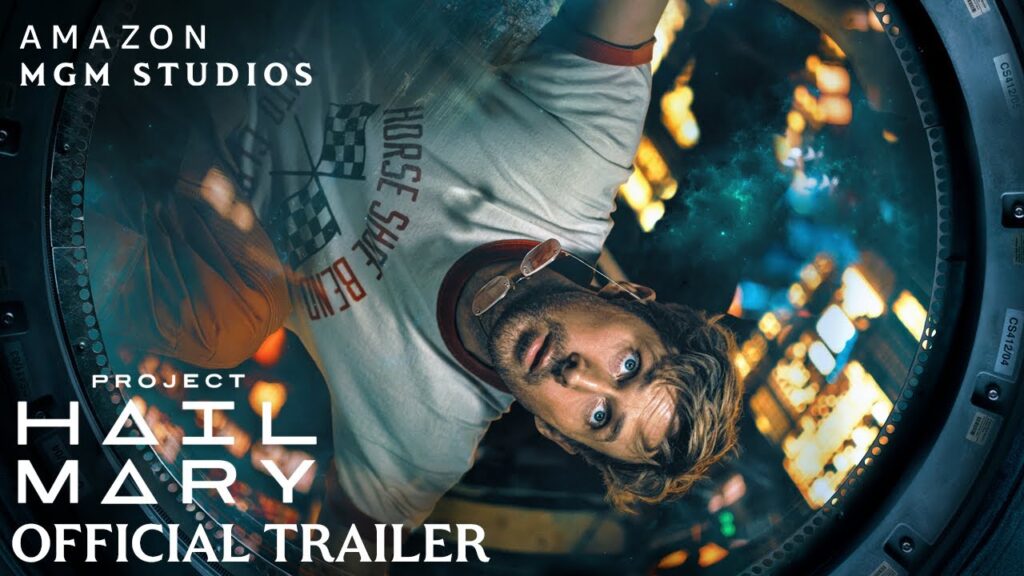
Project Hail Mary has grossed $322 million worldwide, establishing itself as one of 2026’s most successful theatrical releases and signaling meaningful audience appetite for ambitious science fiction narratives delivered exclusively through traditional cinema channels.
The film premiered in London on March 9, 2026, and released in the United States by Amazon MGM Studios on March 20, 2026, with international distribution handled through Sony Pictures Releasing.
The film follows Ryland Grace, a man who awakens on an interstellar spacecraft with no memory of how he came to be there. Ryan Gosling produced the film alongside star duties, with directors Phil Lord and Christopher Miller helming production and screenwriter Drew Goddard adapting the 2021 novel by Andy Weir.
The adaptation represents Goddard’s second collaboration with Weir material, following his successful screenplay work on The Martian.
The film’s box office performance exceeded industry expectations. As of March 30, 2026, Project Hail Mary grossed $169 million domestically and $153 million internationally. These figures represent Amazon MGM Studios’ strongest theatrical debut, surpassing previous studio records and demonstrating that streaming-era studios can still generate blockbuster theatrical performance when content quality justifies theatrical distribution.
Industry analysis suggests the film’s success hinges on several interconnected factors. First, Gosling’s established box office appeal provided fundamental audience confidence.
The actor has maintained consistent theatrical viability despite broader streaming market pressures, enabling studios to justify substantial production investments in projects requiring his participation. Second, the science fiction genre maintained unexpected theatrical appeal during a period when industry observers anticipated genre fatigue.
Critical reception strengthened commercial performance. Rotten Tomatoes assigned the film a 95% favorable rating from 363 critics, with consensus describing it as a “visually dazzling space odyssey that’s carried along effortlessly by the gravitational pull of Ryan Gosling at his most winning”. Metacritic’s weighted analysis assigned a score of 77 based on 60 critics, indicating “generally favorable” reviews.
These critical endorsements circulated through entertainment press and social media, translating critical acclaim into audience awareness.
Production methodology attracted significant technical attention. The film employed 2,018 VFX shots but was not shot using green screens, with directors instead constructing physical spacecraft sets.
This commitment to practical effects over digital construction addressed persistent criticism that contemporary blockbusters rely excessively on digital imagery. Industry observers noted that Lord and Miller’s approach created authenticity that resonated with audiences experiencing digital effects fatigue.
Gosling’s personal involvement extended beyond acting and production duties. Gosling made a surprise appearance at a New York movie theater on opening night, addressing audiences and emphasizing that studios bear responsibility for keeping cinemas viable through quality content creation. His statement—”It’s not your job to keep them open, it’s our job to make things that make it worth you coming out”—articulated a fundamental challenge confronting theatrical distribution in the streaming era.

The film’s narrative structure attracted interesting cultural discourse. Debate circulated around themes that appeared politically charged, generating substantial social media engagement, though specific ideological disputes remained relatively circumscribed within online communities rather than dominating mainstream discourse.
Financial analysis suggests profitability remains uncertain despite substantial box office returns. Variety estimated the film would require approximately $500 million in gross revenue to break even, implying that even its current $322 million performance falls substantially short of profitability thresholds when accounting for production costs, marketing expenditures, and theatrical distribution expenses.
This financial reality introduces interesting tensions in industry discourse. Project Hail Mary simultaneously represents a theatrical success and a commercial underperformance relative to production investment.
The distinction matters significantly for understanding how studios evaluate theatrical projects going forward. If critically acclaimed, commercially successful films still fail to achieve profitability, studios may reconsider whether substantial theatrical investments remain justifiable.
The film’s technical accomplishments warrant note beyond commercial performance. Cinematographer Greig Fraser’s visual approach balanced spectacle with intimate character moments, employing space vistas without allowing visual effects to overwhelm narrative elements.
The approach contrasts with contemporary blockbuster tendencies toward visual overwhelm, suggesting that technical excellence and narrative restraint can coexist within expensive productions.
Lord and Miller’s career trajectory provides context for evaluating the project. The directing pair previously helmed Marvel and Spider-Verse projects, accumulating substantial experience managing complex visual narratives with significant budgets.
Project Hail Mary represents their first major theatrical original property, differentiating it from franchise-dependent productions dominating theatrical schedules.
Looking forward, Project Hail Mary’s performance will likely influence how studios approach theatrical science fiction projects.
Existing data suggests audiences remain willing to engage substantial theatrical experiences when offered compelling narratives and technical execution.
Yet profitability gaps between theatrical returns and production expenses remain the fundamental challenge confronting theatrical exhibition going forward.